The Role of Payment Methods in Enforcing Gambling Limits Within Austrian Mobile Casinos
Geschrieben von Sage Ludwig · 31.10.2026
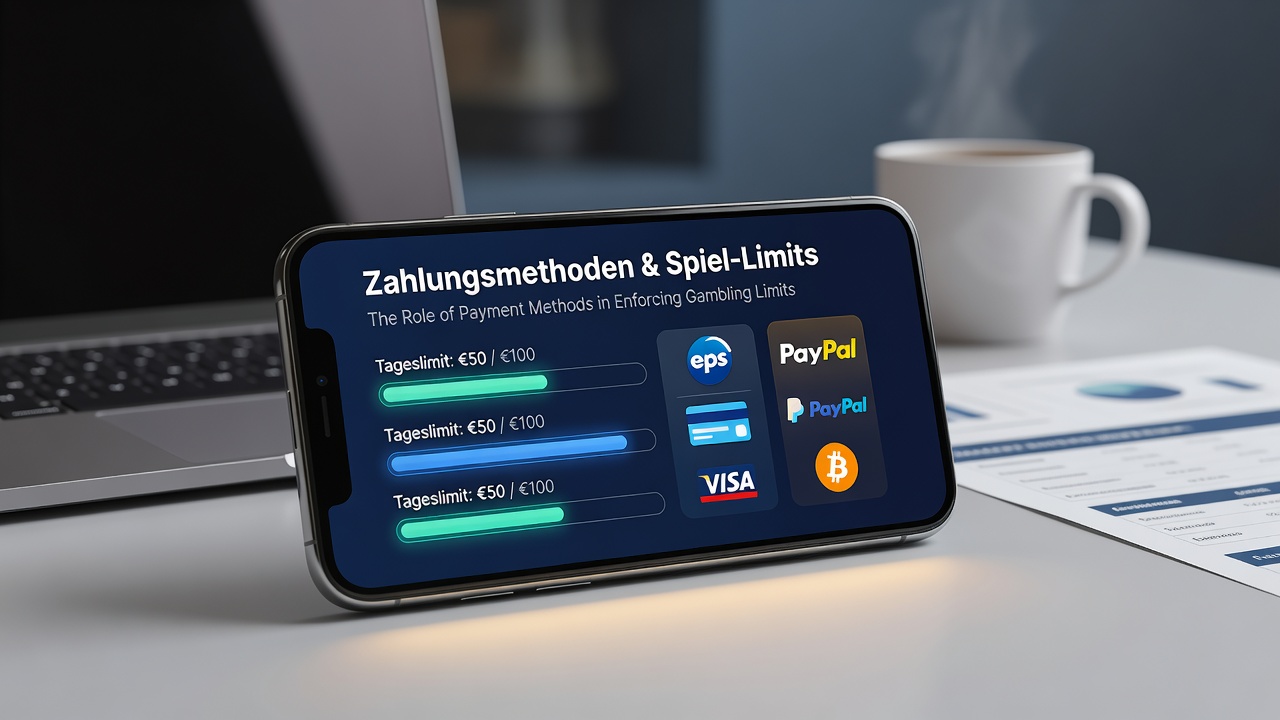
The Role of Payment Methods in Enforcing Gambling Limits Within Austrian Mobile Casinos
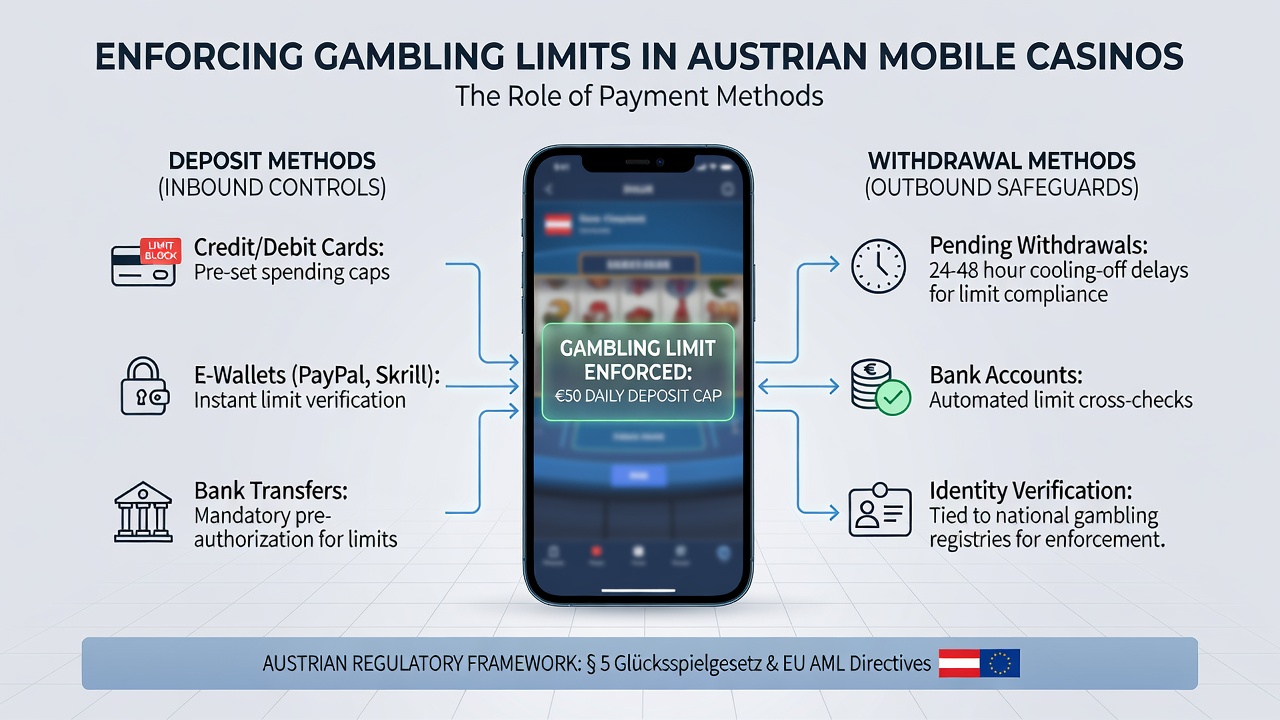
Payment methods serve as the primary mechanism through which deposit limits and spending caps take effect in Austrian mobile casinos, with transaction processors connecting directly to regulatory databases that track player activity in real time. Austrian law requires operators to embed these controls at the point of transfer so that any attempt to exceed a preset threshold triggers an automatic block before funds move. Systems link player accounts to verified payment instruments, which means credit cards, e-wallets, and bank transfers all carry the same limit data pulled from a central registry maintained under the Glücksspielgesetz.
Integration Between Payment Gateways and Limit Systems
Operators configure API connections that pull daily and monthly limits straight from the payment provider's server, and this handshake occurs within milliseconds of each deposit request. When a player selects a method such as an Austrian bank transfer or an international e-wallet, the gateway checks the current balance against the registered cap and rejects the transaction if it would breach the boundary. Research indicates that these embedded checks reduce instances of limit circumvention because the enforcement point sits inside the financial layer rather than solely within the casino software. Observers note that the architecture forces every payment channel to act as a gatekeeper, so even if a user switches between multiple apps or devices the limit data remains synchronized across all sessions.
Payment Methods Commonly Used and Their Built-in Controls
Austrian players rely on a narrow set of approved instruments that already contain limit-enforcement features, including local bank transfers, prepaid vouchers issued by licensed providers, and certain mobile payment solutions tied to verified phone numbers. Each channel transmits unique identifiers that the regulatory platform matches against the player's self-exclusion or limit profile before authorizing the flow of funds. Data shows that prepaid options often carry stricter per-transaction ceilings by design, while bank transfers allow higher volumes yet still route through the same verification layer that halts activity once the monthly threshold is reached. Experts have observed that this uniformity across methods prevents players from bypassing restrictions by simply changing the payment instrument mid-session.
Regulatory Requirements for Payment Providers Operating in Austria
Since the 2021 amendments to national gambling statutes, every payment processor serving Austrian mobile casinos must maintain an active interface with the state-controlled monitoring system, and compliance audits occur quarterly to verify that limit data transmits without delay. New software mandates scheduled for full rollout in October 2026 will require real-time reporting of every rejected transaction so regulators can identify patterns of attempted over-spending across multiple operators. Figures from the Austrian Federal Ministry of Finance reveal that the proportion of blocked deposits has risen steadily as more payment providers integrate these reporting hooks, demonstrating that enforcement now occurs at the financial entry point rather than after the fact.
Impact on Player Behavior and Operator Compliance
Studies conducted by independent research bodies show that players subject to payment-level limits maintain lower average deposit frequencies compared with those whose controls sit only inside the casino interface. The difference arises because the payment gateway stops the transaction before any game balance updates, removing the psychological trigger that sometimes accompanies a visible but still accessible deposit button. Operators must document every limit-related rejection and submit aggregated statistics to the regulatory authority, which in turn publishes anonymized summaries that allow comparison across payment types. One analysis of transaction logs from 2024 through mid-2026 found that e-wallet channels recorded the highest rejection rates, largely because their instant nature makes the limit check more noticeable to users attempting rapid successive deposits.
Technical Standards and Data Exchange Protocols
Payment providers must use encrypted data packets that include the player's hashed identifier, current limit status, and remaining allowance, and these packets travel over dedicated lines separate from standard transaction traffic. The protocol ensures that even if a user attempts to fund an account through a VPN or from outside Austrian territory the limit check still applies because the verification occurs on the provider's domestic servers. Industry reports compiled by the European Gaming and Betting Association highlight that standardized message formats adopted across EU member states have reduced integration errors and allowed Austrian operators to inherit improvements developed for similar systems in other jurisdictions.
Future Developments Expected After October 2026
Beginning in October 2026, updated software requirements will mandate that payment gateways transmit not only limit status but also velocity checks that track the number of deposit attempts within short windows, adding another layer of protection against impulsive spending. Regulators plan to expand the list of accepted payment methods only to those providers that demonstrate full compliance with these velocity rules during testing phases. Data from pilot programs already running in select Austrian districts indicates that the additional checks further decrease the total volume of funds processed once a player approaches the monthly ceiling.
Conclusion
Payment methods have become the operational backbone of limit enforcement inside Austrian mobile casinos because they sit at the exact moment money changes hands. The combination of regulatory mandates, standardized data exchange, and technical integration ensures that limits function uniformly regardless of which approved channel a player chooses. As the October 2026 updates take effect, the role of these financial gateways will expand further, embedding additional behavioral safeguards directly into the transaction flow and maintaining a consistent barrier across all mobile platforms operating under Austrian jurisdiction.